Alaskans know a thing or two about cold weather. But when temperatures drop below zero in Anchorage, Eagle River, or the Mat-Su Valley, homeowners may wonder: Is there a temperature where my heating system simply can’t keep up?
The answer depends on what type of heating system you have, how well it’s maintained, and how efficiently your home holds heat. Furnaces, boilers, heat pumps, and mini-splits respond differently to extreme cold, and some have important operating limits.
Let’s look at the numbers, what they mean for Alaska homes, and when it’s time to give Diamond Heating a call.
Just How Cold Does Anchorage Get?
According to the National Weather Service (NWS), Anchorage’s average January low is approximately 11°F, based on 1991–2020 climate normals. But that’s only an average. During severe cold snaps, temperatures can drop considerably further.
| Average January low | January 2026 low | January record low |
| 11°F | −17°F | −34°F |
Source: National Weather Service Anchorage, January 2026 Climate Report. Figures refer to the official Anchorage reporting station, not all locations in the municipality.
Temperatures also vary across our service area. Coastal influence can moderate winter conditions around Girdwood, while more inland locations in the Mat-Su Valley can experience different cold-weather extremes. That means the right heating setup for a home in Anchorage may not be ideal for a property in Palmer or Wasilla.
Heating System Temperature Limits: What the Numbers Tell Us
Not every heating system has a specific outdoor temperature where it stops working. Some generate heat through fuel combustion, while others transfer heat from outside air. Here’s how the major systems compare.
| Heating system | Outdoor temperature considerations | What homeowners should know |
| Gas furnaces | No universal outdoor temperature cutoff | Proper sizing, airflow, venting, and maintenance matter more than a particular temperature. |
| Boilers | No universal outdoor temperature cutoff | Designed to provide consistent hydronic heating, but need adequate capacity and circulation. |
| Cold-climate heat pumps | 5°F is an important certified performance test point | Qualified models retain at least 70% of their 47°F rated heating capacity at 5°F. |
| Ductless mini-splits | Some cold-climate models operate at −13°F, −15°F, or lower | Actual heating output and minimum operating temperatures depend on the specific model. |
Sources: ENERGY STAR, Air Source Heat Pumps: Key Product Criteria; U.S. Department of Energy, heat pump system design. Temperature figures are performance references, not universal failure points.
Furnaces and Boilers: Built for Serious Cold
Unlike heat pumps, gas furnaces and boilers generate heat rather than extract it from outdoor air. That makes them dependable options for Alaska’s coldest months when they’re properly sized and maintained.
For perspective, ENERGY STAR’s current criteria for certified residential gas furnaces in northern states, including Alaska, require at least 97% Annual Fuel Utilization Efficiency (AFUE). That means a qualifying furnace converts approximately 97% of the fuel’s energy into useful heat over a typical heating season.
However, even a high-efficiency furnace or boiler can struggle during extreme weather if it’s undersized, poorly maintained, or experiencing problems with airflow, water circulation, or blocked venting.
Heat Pumps and Mini-Splits: How Cold Is Too Cold?
Modern cold-climate heat pumps are much more capable than earlier generations. According to ENERGY STAR, qualifying cold-climate heat pumps must meet two important performance requirements at 5°F:
- Maintain at least 70% of their rated heating capacity compared with performance at 47°F.
- Achieve a coefficient of performance (COP) of at least 1.75, meaning at least 1.75 units of heat for every unit of electricity consumed under that test condition.
Some advanced systems continue operating at temperatures well below zero, although heating capacity and efficiency can decline as outdoor temperatures fall. The important distinction? A heat pump being able to operate at −15°F doesn’t necessarily mean it can heat your entire home by itself at −15°F. Depending on the equipment and the home’s heating needs, supplemental heat may be necessary.
Related Diamond Heating article: https://www.diamondheatingalaska.com/heat-pumps-alaska-heating-cooling/
Why Your Heating System Works Harder at −10°F
Here’s something many Alaska homeowners don’t realize: the colder it gets outside, the faster your home loses heat. Consider a home with the thermostat set to 70°F.
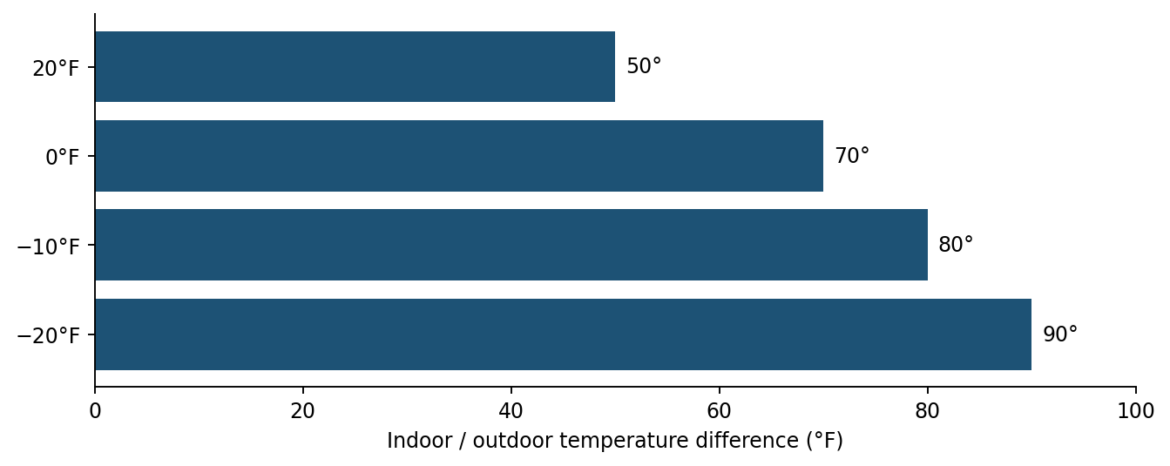
Illustrative temperature differences, not measured energy consumption.
At −10°F, the difference between indoor and outdoor temperatures is 80 degrees, compared with just 50 degrees when it’s 20°F outside. That’s a 60% larger temperature difference. Under otherwise identical conditions, conductive heat loss through a home’s walls, windows, and roof would increase by approximately the same percentage.
That doesn’t automatically mean a 60% increase in your heating bill, but it helps explain why your furnace, boiler, or heat pump runs longer during extreme cold. The U.S. Department of Energy confirms that greater indoor-to-outdoor temperature differences increase heat transfer, making insulation and air sealing especially important in cold climates.
How Can You Tell If Your Heating System Can’t Keep Up?
Longer heating cycles aren’t necessarily a problem during an Alaska winter. However, certain changes deserve attention.
- Your thermostat can’t maintain its setting. If it’s set to 70°F but your home keeps dropping to 65°F, your heating system may not be producing enough heat.
- Your system runs constantly without improving comfort. This may indicate an equipment problem, excessive heat loss, or insufficient heating capacity.
- Some rooms are noticeably colder than others. Uneven heating can point to airflow problems, circulation issues, or inadequate insulation.
- Your outdoor heat pump repeatedly shuts down. Low-temperature operating limits, defrost problems, or equipment faults may be responsible.
If your heating system is running but you’re losing indoor temperature during a cold snap, it’s worth having a professional take a look before the problem becomes a no-heat emergency.
Prepare for the Coldest Days Before They Arrive
One important recommendation from the National Weather Service is to maintain indoor temperatures of at least 55°F when you’re away to help prevent frozen pipes. Even that setting may not protect every pipe in a poorly insulated or particularly exposed area.
For Anchorage and surrounding communities, the best preparation is making sure your heating system is properly maintained, your air filters are clean, and your equipment is appropriate for your home’s heating needs. Diamond Heating provides preventative heating maintenance to help identify potential problems before temperatures take another dive.
When Alaska Gets Too Cold, We’re Here to Help
There’s no single temperature that’s too cold for every heating system. The right equipment, installed and maintained correctly, can make an enormous difference in your home’s comfort and reliability.
From Anchorage and Eagle River to Girdwood and the Mat-Su Valley, Diamond Heating helps homeowners keep their furnaces, boilers, heat pumps, and mini-splits operating through Alaska’s challenging winters.
And when the heat goes out, our team offers 24/7 emergency heating service. We pick up the phone. Contact Diamond Heating today to learn more!