Few heating problems are more frustrating than a system that stops working, flashes an error code, makes a strange noise, and then suddenly returns to normal. It may feel like the problem fixed itself. Unfortunately, intermittent heating issues rarely disappear for good. They tend to return, often at the least convenient time.
They can also be difficult to diagnose if the system is operating normally by the time a technician arrives. A photo, video, or error code from the moment the problem occurred may be the most useful information you can provide.
Your Heating System Is Trying to Tell You Something
Many modern furnaces, boilers, heat pumps, and communicating thermostats monitor system performance. When something goes wrong, the equipment may display:
- A numbered or lettered error code
- A warning message on the thermostat
- A notification in a connected app
- A blinking light on the furnace control board
- A system lockout message
These alerts do not always identify the exact failed component. They do, however, give the technician an important starting point. Depending on the equipment, a code may point toward an ignition problem, restricted airflow, a pressure switch issue, overheating, or another condition that needs further testing. Trane notes that furnace light patterns and codes can indicate several different faults, including ignition failures, limit switch problems, and system lockouts.
Grab Your Phone Before You Reset Anything
When your heating system acts up, document what it is doing before changing settings or shutting off power, provided it is safe to do so. Grab your phone or a notepad and try to capture, make note:
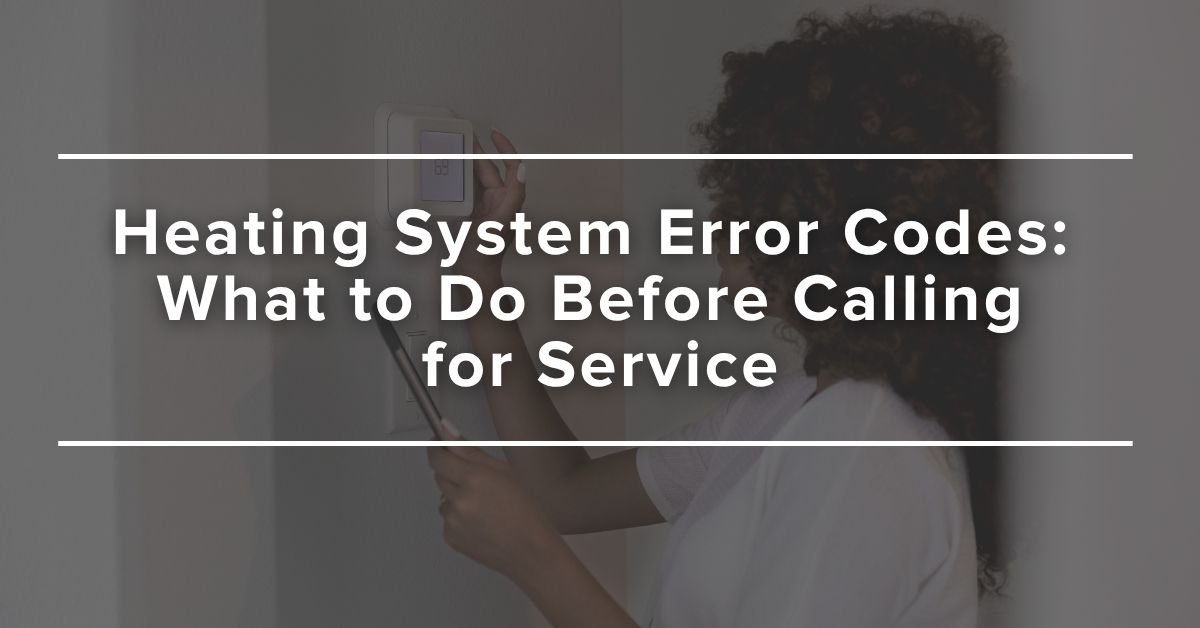
- A clear photo of the entire thermostat or digital display
- A close-up of the complete error code or message
- A short video showing unusual sounds, repeated startup attempts, or short cycling
- A photo or video of any blinking diagnostic light visible through the furnace’s viewing window
- Screenshots of alerts from your thermostat or equipment app
- The approximate time the issue happened and the outdoor temperature
- What the system was doing immediately before the problem began
If a light is blinking, record the full pattern. For example, note whether it flashes three times, pauses, and repeats. Manufacturers use these sequences as diagnostic codes, and sharing the pattern with your technician can help narrow down the problem.
Do not remove equipment panels or reach inside the system to get a better photo.
Should You Reset the System?
It is tempting to reboot the thermostat, flip the breaker, or cycle the furnace switch until the heat comes back on. That may restore heat temporarily, but it can also clear the active message or take the equipment out of the condition the technician needs to observe. Repeated resets may also cause the equipment to attempt the same unsuccessful startup sequence again and again.
If your system has entered an error lockout and the home can remain safe and reasonably comfortable, take photos and contact a heating professional before resetting it. Trane recommends professional service for a furnace in hard lockout so the underlying cause can be corrected before the system is reset.
Do not repeatedly reset a tripped circuit breaker. A breaker can trip because of an electrical or equipment problem, and restarting the unit without finding the cause could lead to additional damage.
Safety Always Comes First
Preserving an error code is helpful, but it is never more important than protecting your home and family. Leave the building and call for emergency assistance from a safe location if:
- You smell natural gas or propane
- A carbon monoxide alarm activates
- You see smoke, sparks or signs of fire
- The equipment has a strong burning or electrical odor
A suspected fuel-gas leak should always be treated as an emergency. During the winter, you should also call promptly if indoor temperatures are dropping or frozen pipes may become a concern. Diamond Heating offers 24/7 emergency service, especially when Alaska temperatures are at their worst. If it is safe to do so, document the error first, then contact our team to schedule service as soon as possible.
Help Us See What Your System Was Doing
Intermittent problems leave clues. A photo of an error code, a video of the startup sequence, or a simple note about when the problem happens can save valuable diagnostic time.
If your heating system is acting unpredictably, do not wait for a complete breakdown. Contact Diamond Heating to schedule service and share any photos, videos, or error messages with our team. The more information we have, the better prepared we will be to track down the problem and get your heat working reliably again.